Showing posts with label Belgium. Show all posts

Wednesday, October 17, 2007

Back to Brussels


Last month we found ourselves hopping on the train for another quick weekend trip to Brussels. One of the reasons we went was to see the Royal Palace, which is only open only during the summer. The "Heaven of Delight" room is quite a sight ... you can't take pictures inside, but you can see some at this site. The ceiling is covered with thousands of wings from Thai jewel beetles ... truly bizarre.


We spent some time exploring Brussels' art nouveau architecture. Here you see the Musée des Instruments de Musique. We went up to the top floor cafe to see the view of the city, but decided we'd leave the exhibits for another visit. Another stop was the Musée Horta, the home and office of one of the most influential art nouveau architects, Victor Horta. The outside is deceivingly simple; the inside is another matter (click on the museum link to see indoor pictures).


We also did a lot of walking around, taking in the Grand Place (which you see poking up in the vista) and the Marolles market. We really like the statues of various guilds in the Place du Petit Sablon ... like this guy -- got the wine & the fish, let's party!


Speaking of party, we seem to be on a roll in seeing stag parties wherever we go. The chicken groom-to-be even stopped for a photo with the two of us (which we'll keep for our private collection). And in a repeat of our last trip to Brussels, we saw a marching band again, this time in a military/veterans procession to the Grand Place. Add to that a couple of drinks at our favorite Brussels witch-themed bar, and some great Belgian food, and it made for a perfect weekend escape.

Come back in about a week for our next post from our recent travels to Germany.

Wednesday, October 03, 2007

The Deep South


The province of Limburg, squeezed between Germany and Belgium, is the only part of the country that has rolling hillsides. We took a weekend to explore some of the unique sites, avoiding the main town of Maastricht (as we'll surely venture back). The Maas river (pictured above), which goes through Rotterdam on its way to the North Sea, cuts through much of the province.


Our first stop was the town of Thorn. The main draw is the "picturesqueness" of the whitewashed buildings in the town center that surround the old abbey church. The town itself dates from the 10th century; the church from the 12th (although like most old churches it has undergone a number of changes).


From Thorn we headed to the town of Arcen, famous for its Kasteeltuinen (castle gardens). Really more of an "estate" than a castle, the gardens are quite extensive.
Fall hadn't quite taken hold yet, so many of the roses and other flowers were still in bloom. There are also some small animal exhibits; among others we saw cranes, antelope, and capuchin monkeys (all pictured below; click to enlarge any photo). There's also a pic on our daily blog.


We stayed in the small town of Kessel. We had a neat room in what looked like an old stablehouse next to the castle ruins. We picnicked by twilight next to the castle along the river Maas, watching the muskrats in the river and listening to a production of "Romeo & Juliet" being performed inside the castle (in dutch, which was quite novel for us).


The next day we headed down to the Netherlands American War Cemetery in Margraten. The only American military cemetery in The Netherlands honors the soldiers who fought in this region during WWII. To see more, here's a post from our daily blog.


On our way home we skirted into Belgian Limburg (yes, just to confuse you, both countries have a Limburg province).
Rochelle was able to enjoy one of her favorites ... mussels ... and with apologies to the dutch and french, she still insists that Belgium does them best.
And I was able to enjoy one of my favorites, Belgian beer ... with apologies to just about every european country, Belgium wins here too, if you like unique flavorful beers.
Tongeren is dominated by its 13th century gothic church. Next to the church is a WWI monument, topped by small children or cherubs that almost look like they're playing with war implements. Pictured below are some detail shots from the church and the memorial (sorry for the blurry crop).
Come back for our next post on 15 October when we return to Brussels.

Wednesday, June 20, 2007

Luxembourg with a side of Belgium

Europe has a lot of "one and onlys" ... this time we visited the world's only sovereign Grand Duchy, Luxembourg. Actually, our first stop was in Belgium, since you pretty much have to drive through most of it to get to Luxembourg. There's a lot of war history in this area; we stopped to see some in the Belgian town of Bastogne. A pleasant little town, it was a crucial spot in the Battle of the Bulge. To commemorate, the Mardasson Memorial sits just outside of town. It's an impressive monument even on a rainy day.


Pictured (click to enlarge): Mardasson Memorial


Then it was off through the rain to the Luxembourg town of Grevenmacher. If the name sounds German, it's because it's right on the border of Germany on the Mosel river. Actually, you're never far from a border in Luxembourg (Belgium, Germany, or France). That's probably why the residents all seem to speak French, German, and their own language (Luxembourgish, a strange combination that sounds like there's some dutch in there too) interchangeably. A quick check in wiki shows that the country is indeed trilingual, and most could speak good English as well.


Grevenmacher has a butterfly garden with many beautiful butterflies as well as the occasional lurking chameleon and a group of chicks that Rochelle was obsessed with but refused to sit still for a picture.


Most people outside of the area probably don't know that this region is known for wine production, in particular cremant (the poor man's champagne). What a surprise that we would visit! After a few stops the trunk was full and we were off to the city of Luxembourg (yes -- Luxembourg, Luxembourg).


Regional artwork: now, if only these fountains spouted real wine...

Just outside of the city are war cemeteries for both Americans and Germans. These are always moving sights. The American cemetery is resting place for over 5,000 soldiers and General George S. Patton. The German cemetery has over 10,000 soldiers; most are in a mass grave.


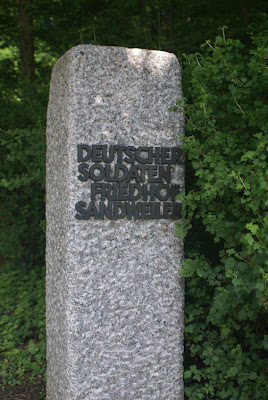
Pictured: top-American cemetery bottom-German cemetery

The city of Luxembourg is unique; divided up by high cliffs and deep ravines; the geography creates some nice views. The center is compact and easy to walk around. We stayed right around the corner from the palace, but there didn't seem to be a lot of activity there. Luxembourg is Europe's culture capital for 2007, and when we were there the main event was a gathering of drum corps. Everywhere we went we saw (heard!) small drum groups, some playing on stages but most kind of walking around performing. Mostly around our hotel. Late at night. It was fun, but luckily we're heavy sleepers.


Pictured: Luxembourg views, Duke's Palace, Night Drumming

Driving home, we decided to get off the motorway in Belgium and take some side roads for a while. This turned out to be a good decision for a couple of reasons. First, we found a really nice wine store in the middle of nowhere. The friendly owner helped us fill our trunk even further. Second, we stopped at a Carrefour grocery store. Dutch grocery stores are much smaller, and it was nice to stop in a big store with such a huge selection for a change. Third, we discovered that the region along the Meuse river is very pretty and scenic. We picked up some strawberries from a roadside stand and stopped for a picnic. A great way to finish a nice quick trip.

Pictured: along the Meuse river

Next post: Week of July 1

Friday, March 09, 2007

Sting in Antwerp

Onze Lieve Vrouw (Cathedral)

We hopped on the train last weekend over the border to Antwerpen, Belgie. The primary reason for the trip was to see Sting in concert, but that was a great excuse to do some sightseeing and enjoy the great Belgian food.


The weather wasn't too great when we arrived Friday night, and Saturday morning greeted us with gale-force winds. We didn't let that stop us, as we walked to the river to check out the old castle De Steen, which is now the Shipping Museum. Needing to get inside, we headed to the old Vleeshuis (meat market), which is now a museum for musical instruments. This was a great find -- you get an audio/visual guide that lets you learn more about the instruments on display (albeit in Dutch) and listen to audio selections.

pictured: De Steen

Antwerp is proud of its artistic tradition, particularly Peter Paul Rubens. The cathedral has two large altarpieces. We also visited the Rubenshuis, which gave a glimpse of how he lived, worked, and collected art.

pictured: Rubens' The Raising of the Cross

The skies parted in the afternoon, and we met up with one of Rochelle's colleagues from the states. Coincidentally he was in Antwerp for a weeklong course. It was great to have an early dinner with him and get the scoop from back home.


The concert itself was not your typical Sting concert. Last year Sting did an album of music by the Elizabethan lute composer John Dowland. The encore included some Sting/Police songs performed "unplugged" with lutes. No one whipped out their lighters, at least not that we saw.


pictured: Bird Market


Sunday we walked around the "Bird Market," so named for its origins as an animal market. Today it's more of a flea market, but there are still vendors that sell rabbits, guinea pigs, and birds.

After the Rubenshuis and lunch, it was a quick train ride home. The train station is, by the way, a great example of the Art Nouveau style for which this area of Belgium is so well known.